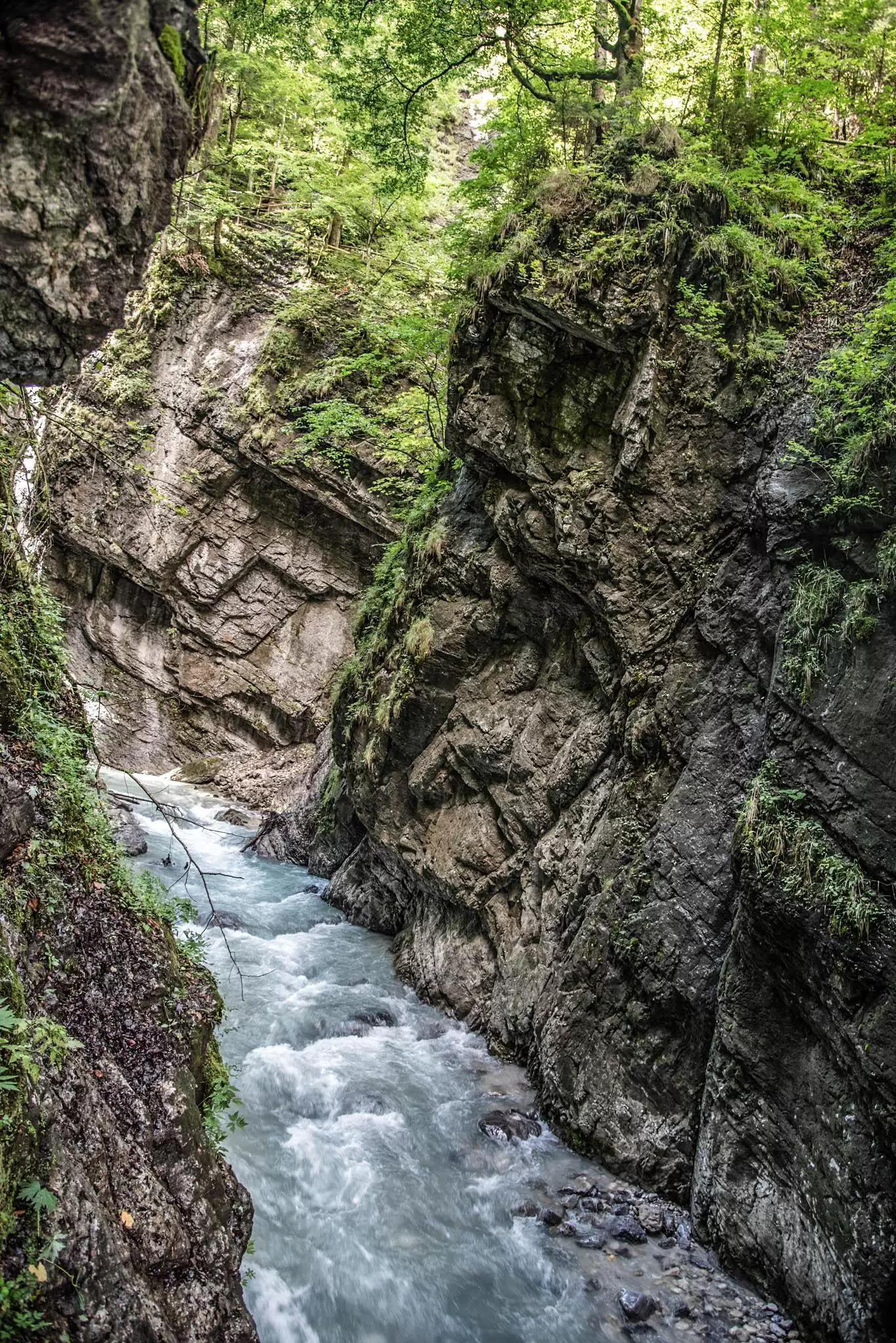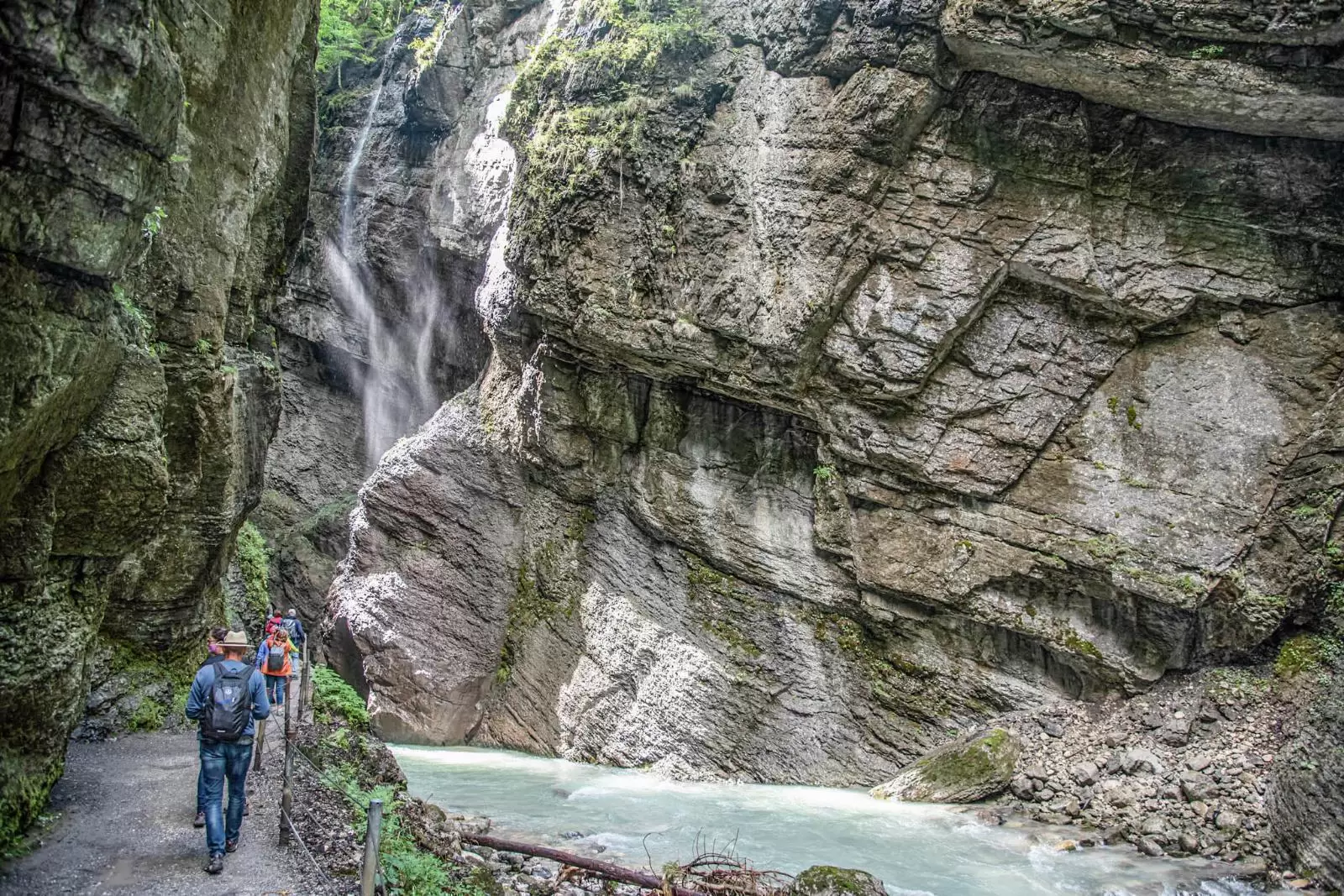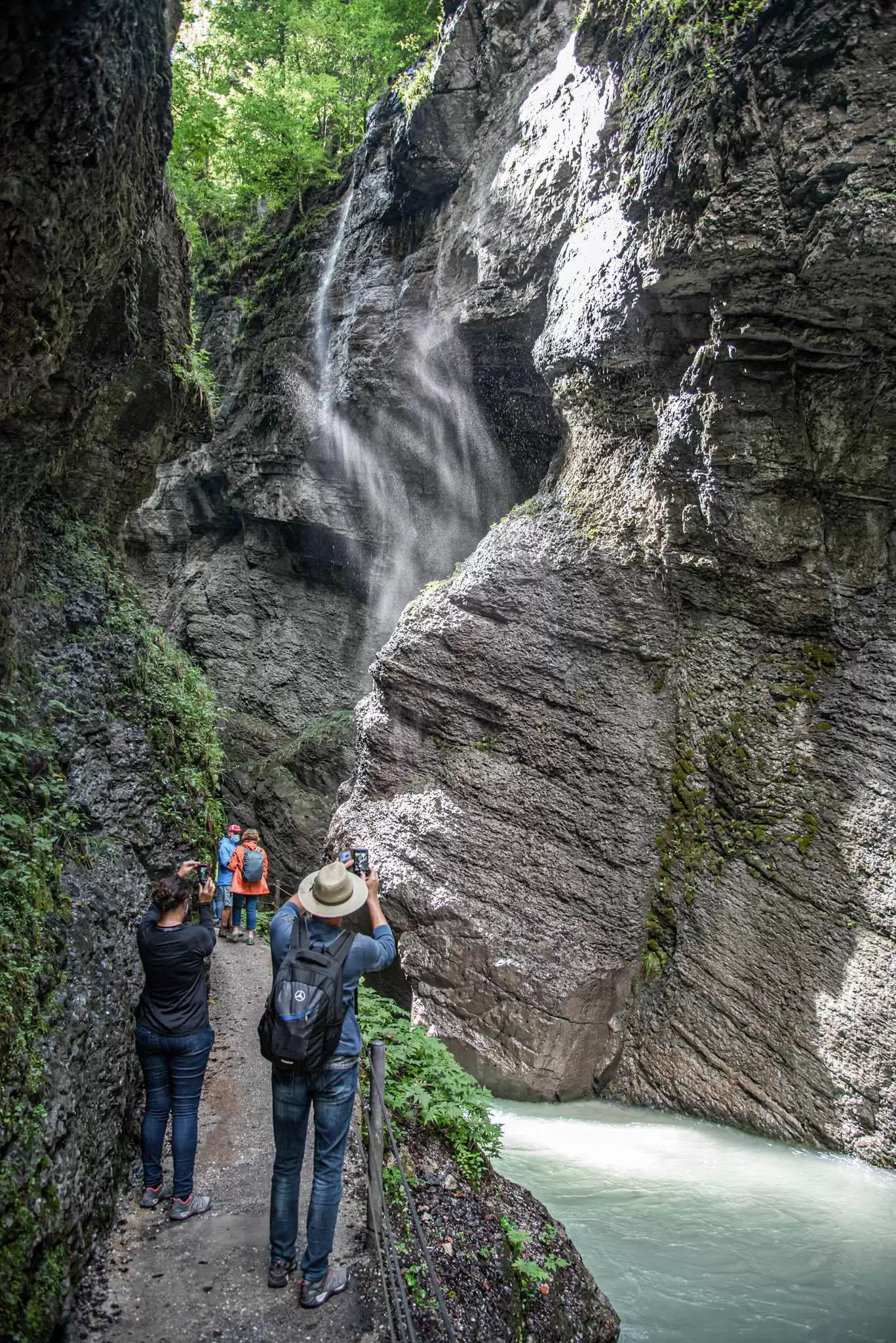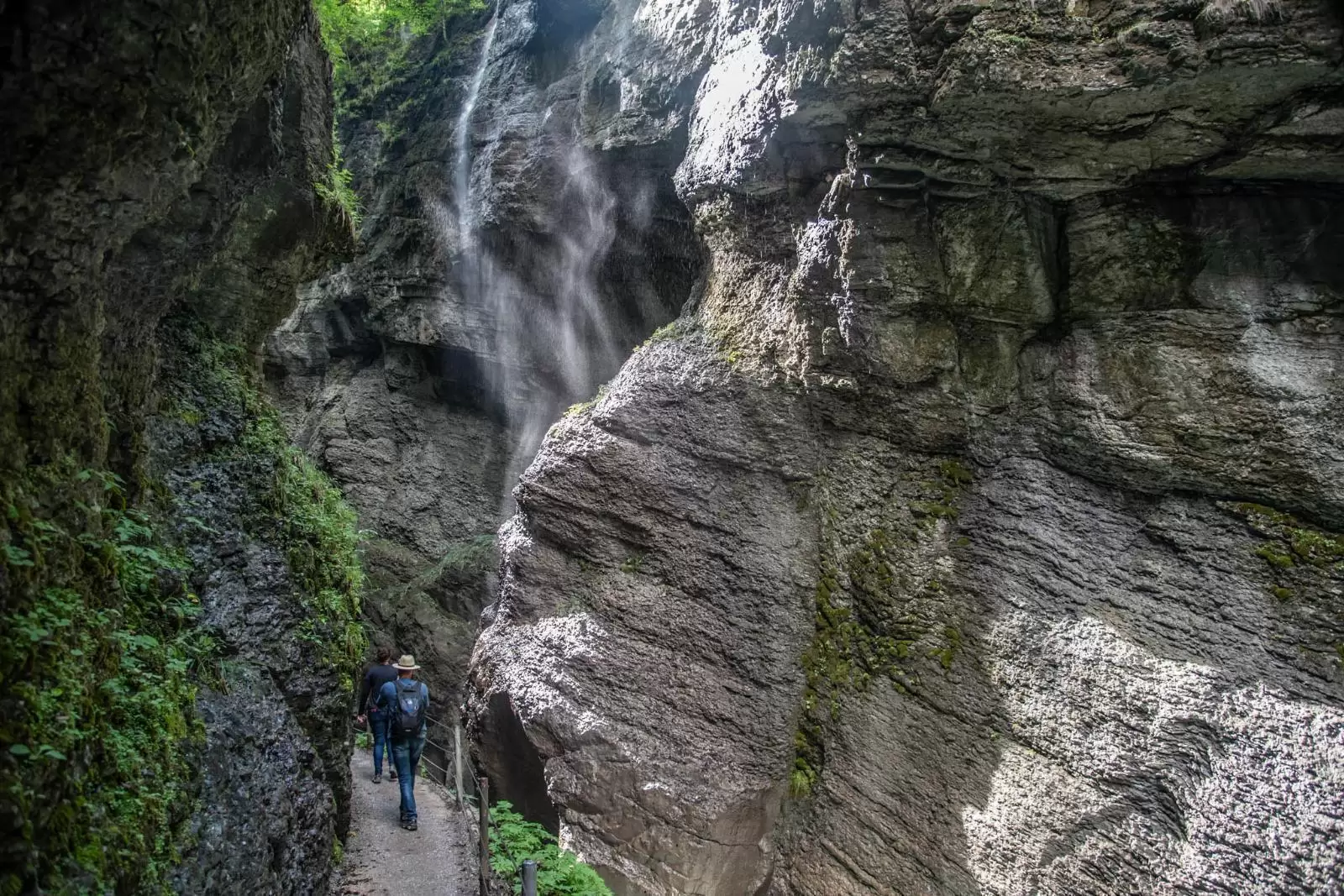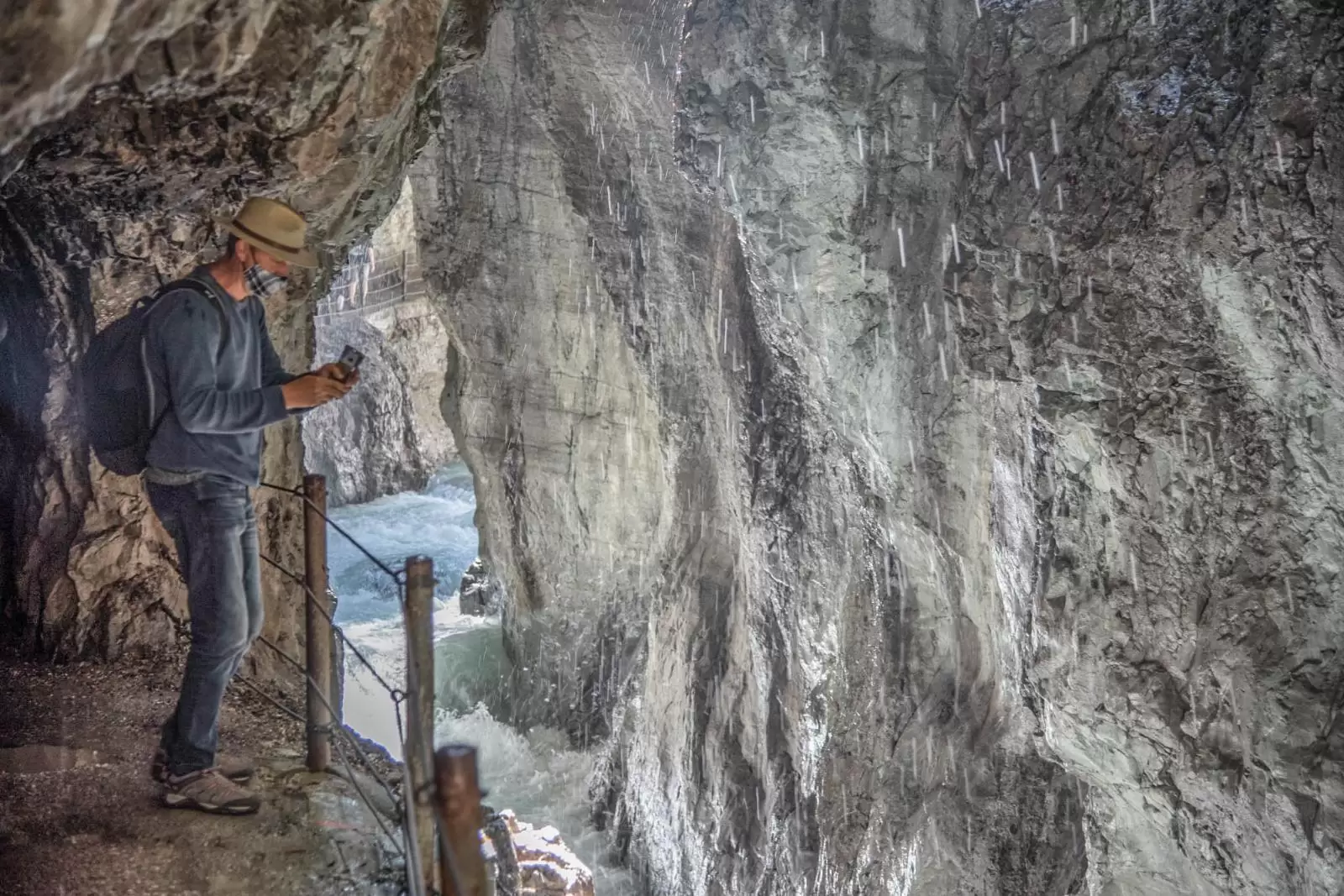
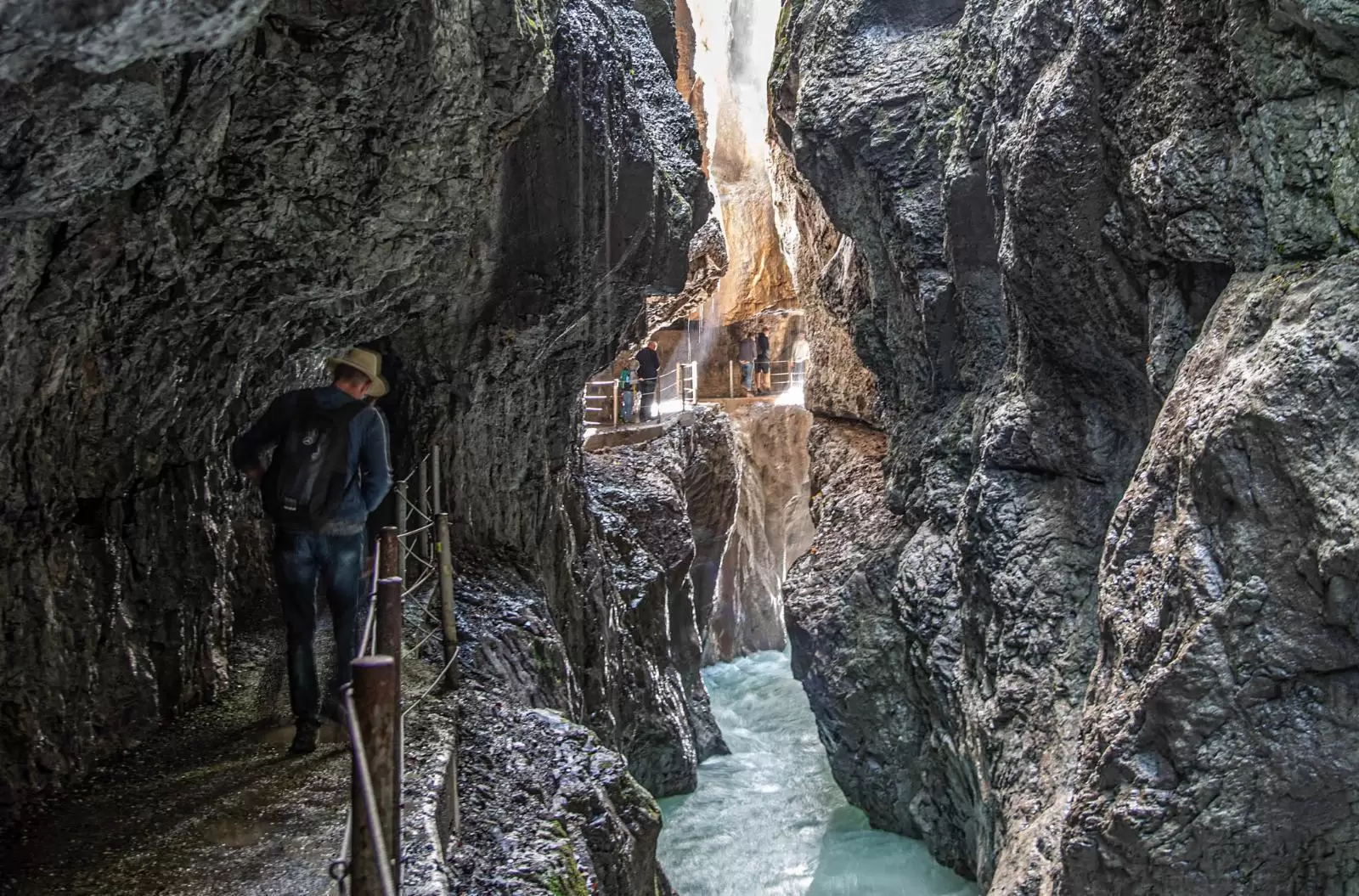
The Partnach Gorge is one of the most spectacular natural wonders in Bavaria. Over thousands of years, the Partnach River carved this 700-metre-long and up to 80-metre-deep gorge into the rock of the Wetterstein Mountains. As you walk through the towering cliffs, you’ll discover breathtaking viewpoints along with fascinating water and light effects. Dripping water, misty spray and pleasantly cool temperatures are all part of the experience. We recommend wearing waterproof clothing and sturdy shoes. However, it’s best to leave your umbrella behind, as it can be inconvenient in the narrow passages. Please note: the Iron Bridge is currently closed due to storm damage.
Attraction: Partnach Gorge – A Natural Wonder near Garmisch-Partenkirchen
What Is Partnach Gorge?
Bavaria is home to countless attractions, from historic towns and charming villages to breathtaking mountain landscapes. One of its most spectacular natural wonders is the Partnach Gorge near Garmisch-Partenkirchen. If you’re visiting the area, this stunning gorge is a must-see. Enjoy the fresh mountain air as you hike through towering rock walls, where every turn reveals another unforgettable view.
What Is a Gorge and How Does It Form?
But first, what exactly is a gorge? A gorge is a deep, narrow valley carved into solid rock by the constant force of a fast-flowing river or stream over thousands of years. That’s why you’ll always find rushing water at the bottom of a gorge. The German word “Klamm” refers to something narrow or confining, which perfectly describes this impressive natural phenomenon.
Good to Know
For your visit to Partnach Gorge, we recommend wearing sturdy shoes, as the hiking trail is often wet from the spray of the river. Due to the narrow paths, tunnels and walkways, the gorge is not suitable for strollers or wheelchairs. Dogs are welcome as long as they are kept on a leash.
Getting to Partnach Gorge
If you’re staying in Garmisch-Partenkirchen and arriving by car, the best place to park is at the Olympic Ski Stadium. While you’re there, you can also admire the impressive Olympic Ski Jump. The parking lot fills up quickly on weekends and during the peak season, so it’s worth arriving early or using one of the nearby parking areas. From the ski stadium, a flat, well-signposted walking path leads to the entrance of Partnach Gorge in about 20 minutes.
Hike Through Partnach Gorge
Once you reach the entrance to Partnach Gorge, you can purchase your tickets either online in advance or at the ticket office on site. As soon as you step into the gorge, an unforgettable natural world unfolds before you. To your right, the Partnach River rushes through the narrow canyon. Over thousands of years, the fast-flowing stream carved this gorge, which reaches depths of up to 80 metres. The 700-metre-long hiking trail follows the towering rock walls, some of which overhang the path. Ferns and mosses thrive in the cool, damp climate. Along the way, you’ll pass through tunnels, cross narrow walkways and follow scenic paths beside the river. Even in the height of summer, the air remains refreshingly cool. Around every corner, new views await, while waterfalls and drifting mist appear high above. When sunlight filters into the gorge, it creates truly spectacular scenes.
Loop Hike via Graseck
After walking through Partnach Gorge, you can either return the same way or continue on a scenic loop hike. For the circular route, follow the Partnach River straight ahead after leaving the gorge. Soon you’ll see signs pointing left toward Eckbauer/Graseck. A series of switchbacks leads uphill, and after about 30 minutes you’ll reach the farms and traditional mountain inns of Graseck, the perfect place for a well-earned break. From there, the route follows a paved road downhill in gentle switchbacks back to the Olympic Ski Stadium, which takes about 40 minutes. This unforgettable hike through Partnach Gorge is sure to be one of the highlights of your trip.
History: How Partnach Gorge Formed Over Millions of Years
Formation of Partnach Gorge
Partnach Gorge began forming around 240 million years ago during the Middle Triassic period. Over countless years, meltwater carrying rocks and sediment gradually carved through the hard limestone, creating the spectacular gorge you can explore today.
Logging and the Opening of the Gorge
The first people to make use of Partnach Gorge were local loggers. Each spring, when the Partnach River carried large amounts of meltwater, they floated freshly cut tree trunks downstream. If the logs became jammed between the rocks, the work quickly turned dangerous, as the loggers had to climb into the gorge to free them. In 1886, a logging trail was built to make this work safer and easier. Between 1910 and 1912, the gorge was gradually developed for tourism. At first, only a few adventurous visitors explored the narrow canyon. In 1912, Partnach Gorge was officially designated a natural monument.
Partnach Gorge Today
Since 1930, visitors have also been able to explore Partnach Gorge during the winter months. Today, this spectacular natural landmark attracts more than 200,000 visitors every year.
Special Tips: Experience the Magic of Partnach Gorge with Ice Formations and Torchlight
Partnach Gorge in Winter
Partnach Gorge is open year-round, including in winter. Be sure to wear sturdy, non-slip shoes and warm clothing. In return, you’ll be rewarded with breathtaking scenery. Frozen rock walls and long icicles create the feeling of walking through an icy palace. Some of the towering ice formations grow together into frozen walls reaching heights of up to 30 metres.
Torchlight Walk Through Partnach Gorge
Another insider tip is a torchlight walk through Partnach Gorge, especially during the winter months. Few experiences are more magical than walking through the narrow gorge with a group of torchbearers. The flickering flames cast a warm glow across the frozen landscape, creating an unforgettable atmosphere. You can find information about the guided torchlight walks at the Partnach Gorge ticket office or online. It’s a truly unique experience that’s well worth joining.
Surroundings: More Natural Highlights Around Partnach Gorge
Garmisch-Partenkirchen
You may already be staying in Garmisch-Partenkirchen when you visit Partnach Gorge. If so, take some time to explore the town’s charming historic centre. Picturesque houses decorated with traditional Lüftl paintings give the town its distinctive Bavarian character. You’ll find many of these beautifully painted buildings along Ludwigstraße in Partenkirchen, the older part of town. The Garmisch district offers a livelier, more modern atmosphere with a great selection of boutiques, restaurants and cafés.
Lake Eibsee
Another breathtaking natural attraction is located just a short drive from Partnach Gorge and Garmisch-Partenkirchen: Lake Eibsee. From Partnach Gorge, it’s about 15 kilometres and takes around 20 minutes by car. If you’re staying in Garmisch-Partenkirchen, you can reach the lake in just 10 to 15 minutes.
You’ll be rewarded with spectacular scenery. Crystal-clear emerald-green water shimmers between the trees, inviting you to explore. You can walk all the way around the lake or simply relax and enjoy the peaceful surroundings. With the Zugspitze massif rising in the background, the views are truly unforgettable. Many visitors consider Lake Eibsee to be one of Germany’s most beautiful lakes. During the summer, you can cool off with a swim in one of its quiet bays. The shoreline is natural and rocky, and the water stays refreshingly cool even on warm days thanks to the mountain meltwater that feeds the lake.
Zugspitze
And there’s even more to discover near Partnach Gorge. No visit to the region is complete without seeing the Zugspitze, Germany’s highest mountain. The large parking area for the Zugspitze cable car is located right next to Lake Eibsee. The modern cable car takes you to the summit while holding two world records: it features the world’s tallest steel support for an aerial tramway at 127 metres and spans the greatest total elevation difference of any cable car in the world at 1,945 metres. From the nearly 3,000-metre-high summit, you’ll enjoy breathtaking panoramic views across the Alps.